Precision Engineering for the New Space Age: Custom CubeSat and Microsatellite Structures by KSF Space
May 12, 2026 2026-05-12 9:59Precision Engineering for the New Space Age: Custom CubeSat and Microsatellite Structures by KSF Space
Precision Engineering for the New Space Age: Custom CubeSat and Microsatellite Structures by KSF Space
The democratization of space is no longer a futuristic concept—it is a current reality. As universities, research institutions, and private enterprises look toward the stars, the demand for reliable, scalable, and customizable hardware has never been higher. At the forefront of this orbital revolution is KSF Space, an organization dedicated to providing the foundational architecture for modern space missions. Whether you are looking for a standard 1U kit or a complex 16u cubesat structure, KSF Space delivers flight-proven engineering designed to withstand the rigors of launch and the harsh environment of Low Earth Orbit (LEO).
The Evolution of Small Satellite Architecture
In the early days of the CubeSat program, options were limited. Today, the industry has shifted toward high-performance, modular designs. KSF Space has pioneered this shift by offering a comprehensive range of frames, from the smallest nanosatellite structure frame to robust microsatellite solutions.
Why Choosing the Right Cubesat Frame Matters
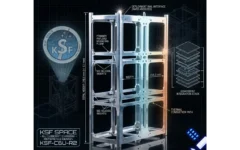
The cubesat frame is the skeleton of your mission. It must protect sensitive electronics, maintain thermal stability, and interface perfectly with the launch vehicle’s deployer. A failure in the structural integrity of the frame often means a failure of the entire mission. This is why KSF Space utilizes high-grade aerospace alloys, primarily Aluminum 6061 or 7075, to ensure maximum strength-to-weight ratios.
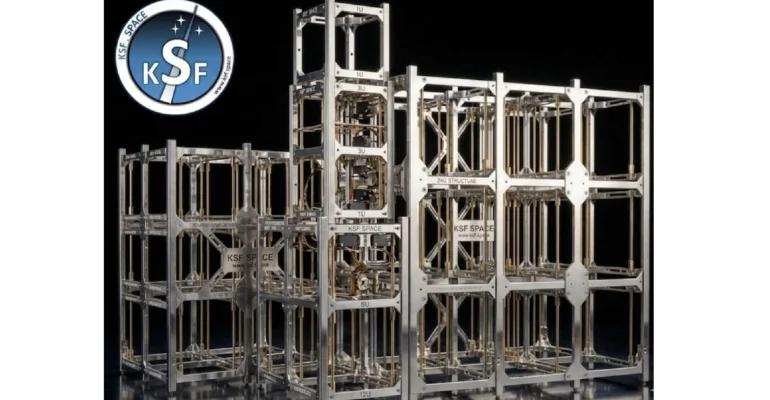
Scaling from 1U to 24U: Modular Flexibility
Every mission has unique spatial requirements. KSF Space offers a standardized yet flexible catalog:
- 1U, 2U, and 3U: Ideal for educational projects and simple technology demonstrations.
- 6U and 12U: The “sweet spot” for commercial IoT constellations and Earth observation.
- 16U and 24U: Advanced structures for deep-space exploration and high-bandwidth communication payloads.
Mastering the 16u Cubesat Structure: The New Standard for Heavy Payloads
As payloads become more sophisticated, the 16u cubesat structure has emerged as a critical configuration. It provides the volume necessary for advanced propulsion systems, large optical lenses, and high-capacity battery banks without the prohibitive costs associated with traditional large satellites.
Engineering Excellence in 16U Design
A 16u cubesat structure from KSF Space is engineered to minimize vibration during ascent while maximizing internal usable volume. By choosing a 16-unit configuration, developers can bridge the gap between nanosatellites and microsatellites, allowing for mission capabilities that were previously impossible in a small-form factor.
Benefits of the 16U Configuration
- Enhanced Power Generation: Larger surface area allows for more expansive deployable solar arrays.
- Thermal Management: Increased volume permits more sophisticated heat pipes and radiators.
- Payload Diversity: The ability to fly multiple instruments on a single bus.
How to Build a Satellite: A Step-by-Step Guide for Modern Missions
Many researchers ask, “how to build satellite hardware that actually survives?” The process is a blend of rigorous math, precise manufacturing, and exhaustive testing.
Step 1: Mission Definition and Orbit Selection
Before you build your satellite, you must define its purpose. Will it perform remote sensing, telecommunications, or scientific research? This determines your power requirements and, consequently, your cubesat structure size.
Step 2: Selecting the Nanosatellite Structure Frame
Once your payload is defined, you must choose your housing. Whether you need a 1u, 3u, or a 6U frame, ensure it meets the “CubeSat Design Specification” (CDS). KSF Space frames are fully compliant with major launch providers like SpaceX, ISRO, and Arianespace.
Step 3: Component Integration
Integration involves placing the On-Board Computer (OBC), Electrical Power System (EPS), and Attitude Determination and Control System (ADCS) into the cubesat frame.
Step 4: Environmental Testing
To be “ready for your space mission,” the structure must undergo:
- Vibration Testing: Simulating the rocket launch.
- Thermal Vacuum (TVAC): Simulating the extreme temperature swings in space.
Beyond CubeSats: Microsatellite and Customize Structure Solutions
While CubeSats follow a 10x10x10cm unit standard, many missions require a microsatellite approach. A microsatellite typically weighs between 10kg and 100kg and offers a more “bespoke” geometry.
Why Customize Structure Components?
Off-the-shelf solutions don’t always fit. KSF Space specializes in the ability to customize structure designs to accommodate non-standard sensors or unique deployment mechanisms. This flexibility is what makes KSF Space one of the top providers globally.
Flight References and Proven Success
When you partner with KSF Space, you aren’t just buying metal; you are buying heritage. With numerous flight references, these structures have already proven their durability in the vacuum of space. Reliability is the ultimate currency in the aerospace industry.
The Advantages of KSF Space Aluminum Frames
The material choice for a nanosatellite structure frame is vital. KSF Space focuses on high-quality aluminum for several reasons:
- Outgassing: Low outgassing properties prevent the contamination of optical instruments.
- Conductivity: Excellent electrical grounding and thermal conductivity.
- Weight: Critical for keeping launch costs low.
Whether you are looking to build a 2 unit or a massive 24u constellation, the precision machining at KSF Space ensures that every bolt hole and rail alignment is perfect.
Frequently Asked Questions (FAQ)
How to build cubesat structure for a university project?
The easiest way is to start with a modular kit from KSF Space. Begin with a 1u or 3u frame, which allows students to learn the fundamentals of integration and space-readiness without the complexity of larger systems.
What is the difference between a nanosatellite and a microsatellite?
Nanosatellites generally range from 1kg to 10kg (often following the CubeSat standard), while a microsatellite ranges from 10kg to 100kg. KSF Space supports both formats with specialized frames.
Can I get a 16u cubesat structure customized?
Yes. KSF Space allows you to customize structure layouts, including internal mounting plates, exterior skin thickness, and aperture cutouts for cameras or antennas.
Why is KSF Space considered a top provider?
With a focus on affordability, rapid prototyping, and a deep catalog ranging from 1u to 24u, KSF Space provides the flight heritage and engineering support that new space entrants need to succeed.
What materials are used in a KSF Space cubesat frame?
Most frames are constructed from Aerospace-grade Aluminum (6061-T6 or 7075), often with hard-anodized coatings to prevent cold-welding in space.
References and Technical Standards
- The CubeSat Design Specification (CDS): The primary industry document outlining the dimensions and requirements for 1U-12U structures.
- NASA State of the Art of Small Spacecraft Technology: Annual reports detailing the shift toward larger 16u and 24u platforms.
- KSF Space Mission Heritage Reports: Documentation regarding previous successful deployments and flight-proven hardware (available at www.ksf.space).
- ESA (European Space Agency) Small Sat Standards: Guidelines for structural safety and debris mitigation in LEO.
Ready to launch? From initial design to final flight-ready hardware, KSF Space is your partner in reaching orbit. Whether it’s a 1u, 3u, 6U, or a custom 16u cubesat structure, your mission starts with a solid foundation. Visit www.ksf.space today to build your satellite for tomorrow.