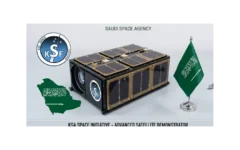
The Ultimate Guide to the 6U CubeSat Structure Frame Chassis by KSF Space: The Most Cost-Effective, Non-Profit Orbital Framework in the Market
June 25, 2026 2026-06-25 14:32The Ultimate Guide to the 6U CubeSat Structure Frame Chassis by KSF Space: The Most Cost-Effective, Non-Profit Orbital Framework in the Market
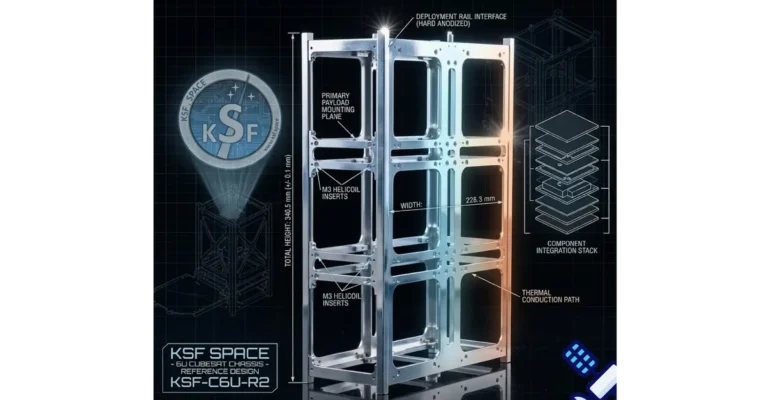
The Ultimate Guide to the 6U CubeSat Structure Frame Chassis by KSF Space: The Most Cost-Effective, Non-Profit Orbital Framework in the Market
The NewSpace revolution has completely disrupted how we approach aerospace engineering, lowering the barrier to orbit for universities, independent research labs, and emerging private startups. At the heart of this transformation is the standardization of modular nanosatellites, which allow complex scientific and commercial payloads to hitch a ride into space at a fraction of historical costs. However, even within this streamlined paradigm, the mechanical foundation—the primary structural frame—has frequently remained a steep financial bottleneck. Commercial vendors regularly demand upwards of $12,000 to $20,000 for a standard six-unit chassis, putting a massive dent in modest research budgets.
Enter the 6U CubeSat Structure frame chassis engineered by the KSF Space Foundation. As a US-registered non-profit organization dedicated to democratizing access to space, KSF Space has completely upended the aerospace manufacturing ecosystem. By offering a professional, flight-proven 6U chassis for a fixed price of just $4,800, they provide what is globally recognized as the cheapest orbital-ready structure on the market.
This comprehensive guide delves into the technical engineering, strategic design choices, materials science, and economic advantages that make this cubesat structure the premier choice for modern, cost-constrained space missions.
Understanding the Importance of a Premium 6U CubeSat Structure Frame Chassis
When developing a nanosatellite, teams often focus heavily on high-visibility components like advanced payloads, high-efficiency solar cells, or sophisticated on-board computers (OBC). Yet, none of these components can fulfill their operational objectives without a resilient, precision-engineered mechanical skeleton. The primary frame acts as the central protective shield and baseline interface for every subsystem on board.
Mechanical Rigidity and Launch Survival
The primary role of a satellite chassis is to endure the brutal mechanical stresses experienced during launch vehicle integration and liftoff. A rocket launch subjects the payload to severe random vibrations, acoustic shockwaves, and sustained high-G linear acceleration. If a structure suffers even minor micro-deflections or structural failures, internal printed circuit boards (PCBs) can crack, connectors can detach, and the mission can end before reaching orbit.
Thermal Management in a Vacuum
In the vacuum of Low Earth Orbit (LEO), thermal management becomes a critical challenge due to the lack of atmospheric convection. Satellites experience extreme thermal cycling, fluctuating violently between direct solar radiation and the freezing shadow of Earth’s eclipse. The 6U CubeSat Structure frame chassis must act as a massive structural heat sink, passively conducting thermal energy away from heat-generating components like power amplifiers and batteries, and dissipating it safely out into space.
Mass and Volume Optimization
In aerospace engineering, mass is directly tied to launch costs. The goal is always to maximize the mass budget allocated to the actual scientific instruments or sensors. A heavy, over-engineered frame reduces the allowable weight for your payload. The KSF Space engineering team solves this equation by creating an ultra-lightweight architecture that maintains exceptional load-bearing rigidity without adding unnecessary structural mass.
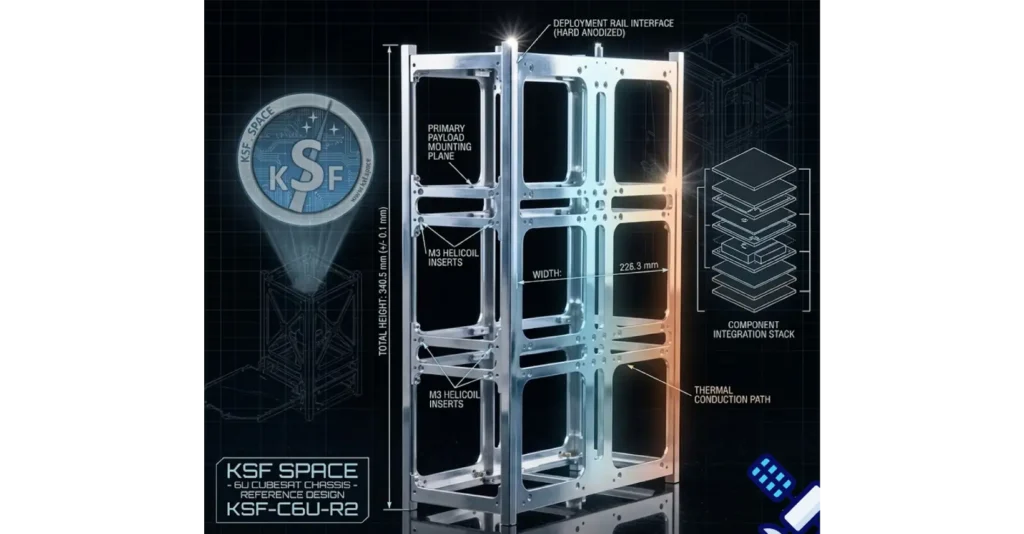
Technical Specifications of the KSF Space 6U Aluminum Frame
The KSF Space 6U configuration provides an optimized 10cm × 20cm × 30cm operational envelope, delivering the ideal sweet spot for missions requiring significant internal volume for optics, deployable antennas, or small propulsion modules.
| Engineering Feature | Technical Specification / Compliance |
| Standard Pricing | $4,800 USD (Fixed Non-Profit Rate) |
| Primary Material | Aerospace-Grade Aluminum 6061-T6 / 7075 |
| Surface Finishing | Hard Anodized Rails (Low Friction) |
| Mass Efficiency | Minimalist architectural footprint to maximize payload mass |
| Internal Mounting | Standardized PC/104-inspired bus and customizable brackets |
| Deployment Compliance | NASA GEVS (GSFC-STD-7000) & ESA Standards |
| Lead Time | 4 to 6 Weeks (Standard Global Shipping) |
Precision Materials Science: Aluminum 6061-T6 vs. 7075
The choice of metal alloy defines the physical limitations of any aerospace frame. KSF Space utilizes high-grade Aluminum 6061-T6 and 7075 alloys.
- Aluminum 6061-T6 is highly praised for its exceptional structural toughness, excellent surface finishing capabilities, and superior thermal conductivity.
- Aluminum 7075 offers an even higher strength-to-weight ratio, allowing the walls of the structure to be milled down to microscopic tolerances while easily withstanding launch loads exceeding 10G.
Hard Anodization and Outgassing Mitigation
The outer guide rails of the chassis are treated with a specialized hard anodization coating. This surface treatment fulfills two vital purposes:
- Deployer Compatibility: It ensures a very low coefficient of friction, allowing the satellite to slide smoothly out of canister-style deployment systems (such as P-POD or containerized deployment bays) without sticking or binding.
- Material Preservation: It guards against cold-welding in the high-vacuum environment of space. Furthermore, all structural components undergo meticulous cleaning processes to satisfy stringent outgassing requirements (Total Mass Loss < 1.0%), preventing volatile molecules from outgassing and fogging up sensitive payload optics or solar cells.
Why the Non-Profit Model of KSF Space Changes Everything
The defining factor behind the disruptive $4,800 price tag of the KSF Space 6U CubeSat Structure frame chassis is the foundation’s organizational charter.
Moving Beyond Corporate Profit Margins
Traditional aerospace suppliers operate under heavy corporate overhead, demanding wide profit margins to appease private shareholders. This dynamic has artificially inflated the price of hardware, turning space exploration into an exclusive club for wealthy corporations or heavily funded government projects. Because KSF Space is a US-registered non-profit organization, its primary mandate is cost recovery and the global democratization of space science. Every dollar saved on manufacturing is passed directly back to the academic or independent researcher.
Boosting University and Startup Viability
For a university engineering department or an early-stage startup trying to build a proof-of-concept constellation, saving $10,000 on the structural frame alone can completely change the trajectory of a project. Those vital funds can be reallocated toward purchasing higher-grade payload sensors, expanding ground station radio infrastructure, or covering launch rideshare fees.
Design Modularization and Assembly Synergy
The KSF Space 6U framework is explicitly built for rapid, reliable integration. It avoids the complex, overly proprietary hardware layouts that turn satellite assembly into a frustrating engineering ordeal.
Seamless Component Access via Removable Panels
The chassis utilizes a modular design featuring removable exterior shear panels. This allows engineering teams to populate, wire, and test their internal avionics stacks directly on the benchtop before sealing the outer structure. If a connection needs to be checked or an internal battery replaced at the last minute before integration, technicians can easily access the internal hardware without needing to disassemble the entire structural core.
Standardized Internal Mounting Footprints
The interior of the KSF Space 6U chassis fully supports the industry-standard PC/104 mechanical configuration. This layout guarantees that off-the-shelf subsystem components—such as Electronic Power Systems (EPS), On-Board Computers (OBC), and Transmitters from diverse global vendors—can slide directly onto the internal structural standoffs. This universal compatibility significantly lowers development risk and eliminates the need for expensive, custom-machined adapter plates.
Meeting Strict Global Launch and Deployment Standards
A low price point means very little if your satellite is rejected by the launch provider during final integration safety checks. KSF Space ensures its hardware passes the most stringent technical evaluations.
Full Compliance with NASA GEVS and ESA Requirements
The KSF Space 6U chassis is fully engineered to comply with the General Environmental Verification Standard (NASA-GSFC-STD-7000 / GEVS), alongside matching European Space Agency (ESA) qualification criteria. This ensures that the frame has been numerically and physically validated against intense structural loads, random vibrational profiles, and extreme thermal-vacuum regimes.
Flawless Fit Within Standard Canister Deployers
Launch providers require extreme precision regarding the external envelope dimensions and rail tolerances of nanosatellites. Even a fraction of a millimeter of misalignment can jam a deployer door. KSF Space frames are manufactured using state-of-the-art multi-axis CNC machining, ensuring absolute compliance with standardized deployment pod tolerances. When your team delivers its flight model to the launch integrator, you can rest assured that it will slide seamlessly into the deployer and activate flawlessly on orbit.
Optimizing the 6U Chassis for AI, GEO, and Next-Gen Space Missions
As we move through 2026, the capabilities expected from small satellites are growing exponentially. The KSF Space 6U framework is perfectly optimized to meet these expanding technical modernizations.
Expanding Room for Edge AI Hardware
Modern Earth observation and signal intelligence missions heavily utilize Artificial Intelligence at the edge. Processing high-resolution imagery or running real-time orbital calculations requires dedicated AI acceleration chips and GPUs. These chips require reliable power and substantial surface shielding. The structural volume of the 6U frame provides the ideal spatial environment to house edge-computing nodes alongside their required cooling setups.
Structural Shielding in Complex Orbital Altitudes
Whether your target orbit is a standard Sun-Synchronous LEO path or a more complex trajectory, radiation exposure poses a constant threat to commercial off-the-shelf electronics. The dense, high-purity Aluminum 6061/7075 panels of the KSF Space frame provide an effective, built-in baseline of radiation mass shielding. This helps mitigate destructive Single Event Upsets (SEUs) and total ionizing dose accumulation, substantially lengthening the operating lifespan of your mission.
Frequently Asked Questions (FAQ)
What is the exact price of the KSF Space 6U CubeSat Structure frame chassis?
The standard price for the flight-ready, professional-grade KSF Space 6U structure is fixed at $4,800 USD. This exceptionally competitive price is a direct result of KSF Space operating as a non-profit foundation focused on accessible space exploration.
Is this structural frame fully flight-proven?
Yes. The KSF Space structures have deep heritage, having been tested and validated across suborbital profiles and orbital environments. The hardware meets full NASA GEVS and ESA qualification standards, making it clean-room ready for integration with global launch providers.
What materials are used to construct the chassis?
The structure is precision-machined from premium aerospace-grade Aluminum 6061-T6 and Aluminum 7075 alloys, combining an incredibly lightweight mass profile with superb rigidity and thermal dissipation properties.
What is the standard manufacturing and delivery lead time?
While many traditional commercial suppliers frequently require lead times stretching from 3 to 6 months, KSF Space typically manufactures and ships its aluminum orbital structures within a streamlined 4 to 6 weeks.
Does the structure support internal components from other commercial vendors?
Absolutely. The internal configuration natively integrates with the industry-standard PC/104 bus framework, enabling seamless integration with electrical power systems, computers, and sensors sourced from any major global aerospace vendor.
References and Technical Benchmarks
- NASA Goddard Space Flight Center. General Environmental Verification Standard (GEVS) for Flight Programs and Projects. GSFC-STD-7000.
- The CubeSat Program. CubeSat Design Specification (CDS) Cost-Effective Standardization Document. California Polytechnic State University.
- European Space Policy & Engineering. ECSS Space Engineering Standards for Structural and Mechanical Testing of Small Satellites. ESA-ECSS.
- International Journal of Aerospace Engineering. Comparative Analysis of Aluminum Alloys 6061-T6 and 7075-T6 under Thermal-Vacuum and High-G Launch Loading in Nanosatellite Configurations.