The Ultimate Guide to the Most Affordable 16U CubeSat Structure for Modern Space Missions by KSF Space
May 12, 2026 2026-05-15 10:57The Ultimate Guide to the Most Affordable 16U CubeSat Structure for Modern Space Missions by KSF Space
The Ultimate Guide to the Most Affordable 16U CubeSat Structure for Modern Space Missions by KSF Space
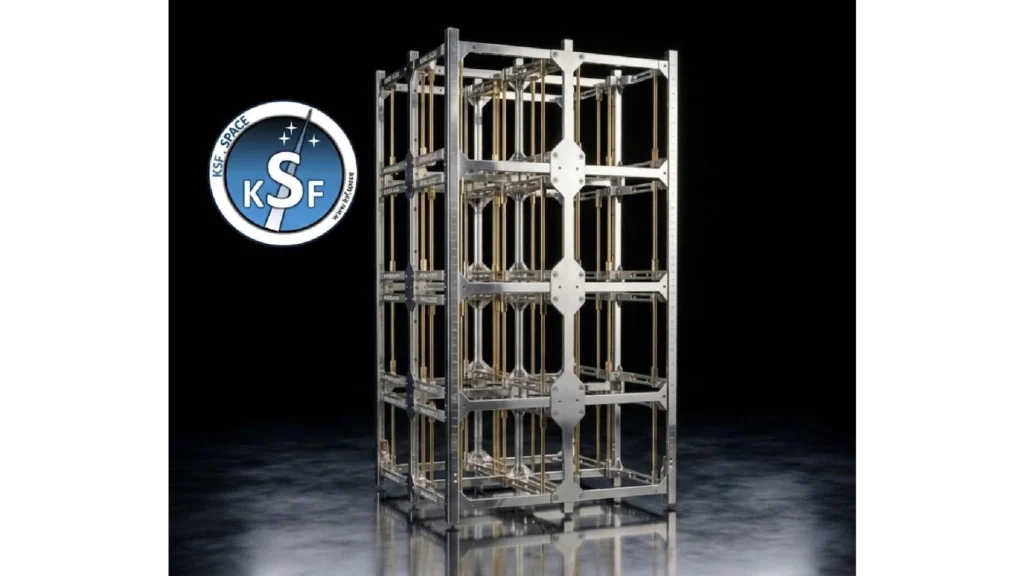
The democratization of space is no longer a futuristic concept—it is a present-day reality. As universities, research institutions, and private enterprises look toward the stars, the demand for reliable, scalable, and cost-effective hardware has skyrocketed. At the heart of this revolution is the 16U CubeSat structure, a versatile platform that balances payload capacity with launch affordability.
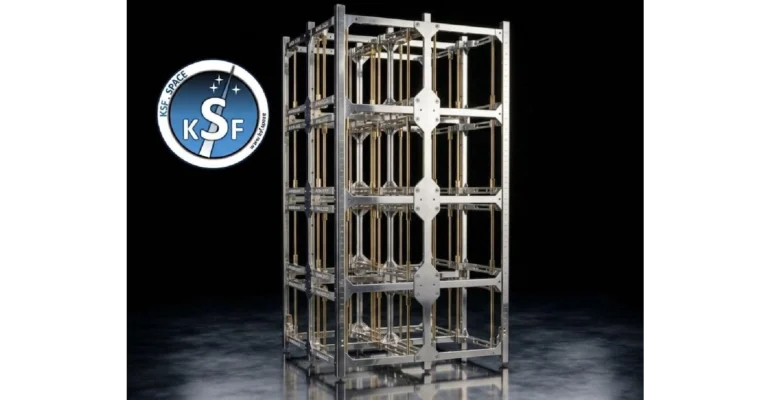
Among the various providers in the global market, KSF Space has emerged as a leader in providing high-performance, flight-proven hardware. Their 16U frame is widely recognized as the most affordable cubesat structure in the world, offering a bridge between small-scale experimentation and robust orbital operations.
Why the 16U CubeSat Structure is the New Standard for Nanosatellites
For years, the 1U, 2U, and 3U formats dominated the industry. However, as mission requirements become more complex—incorporating AI processing, advanced imaging, and sophisticated telecommunications—the need for more volume has become apparent. The 16U cubesat structure provides the ideal “middle ground,” offering significantly more internal volume than a 12U but remaining more cost-effective and easier to manifest for launch than a 24U.
Maximizing Payload and Power
A nanosatellite structure frame in the 16U category allows engineers to integrate larger deployable solar arrays and high-gain antennas. This extra space is critical for missions that require high power generation or deep-space communication capabilities that smaller frames simply cannot support.
Structural Integrity and Material Excellence
KSF Space utilizes high-grade aluminum alloys to ensure that their cubesat frame designs are not only lightweight but also incredibly resilient. The 16U model is engineered to withstand the intense vibrations and thermal cycles experienced during launch and orbital life, providing a secure environment for sensitive electronics.
Key Technical Specifications of the KSF Space 16U Frame
When selecting a 16U cubesat structure, technical compliance with launch provider standards (such as those from SpaceX, ISRO, or Arianespace) is non-negotiable. The KSF Space 16U frame is designed with “Plug-and-Play” modularity in mind.
Modular Design and Customization
One of the standout features of the KSF Space catalog is the ability to customize structure configurations. Whether your mission requires specific mounting points for thrusters or specialized shielding for radiation-heavy environments, the 16U frame can be tailored to meet those needs.
- Standard Formats Supported: While the focus is on 16U, the architecture is derived from the same flight-proven heritage as their 1U, 3U, 6U, and 12U models.
- Mass Efficiency: The frame is optimized to maintain a low primary structure mass, allowing for a higher mass allocation for the actual payload.
- Accessibility: Removable side panels allow for easy integration of internal components and “late access” requirements before the final “Remove Before Flight” pull.
Flight Heritage: A Proven Track Record in Orbit
In the space industry, “Flight Heritage” is the ultimate currency. You don’t want your mission to be the “test case” for a new design. KSF Space has a long history of successful missions, providing peace of mind to project managers and lead engineers.
The 16U cubesat structure from KSF Space has been utilized in various research and commercial contexts, proving its durability in the harsh environment of Low Earth Orbit (LEO). By choosing a frame with flight references, you significantly reduce the “Mission Failure” risk profile associated with structural fatigue or deployment issues.
Comparing the 16U to Other CubeSat Formats
Understanding where the 16U fits in the hierarchy of nanosatellite structure frame options is essential for mission planning.
| Structure Size | Primary Use Case | Complexity |
| 1U / 2U | Educational kits, simple sensors, and tech demos. | Low |
| 3U / 6U | Earth Observation (EO), IoT constellations, and biology experiments. | Medium |
| 12U / 16U | High-resolution imaging, AI-edge computing, and inter-satellite links. | High |
| 24U | Deep space exploration and heavy-duty communication hubs. | Very High |
The 16U format is increasingly popular because it fits perfectly within standard dispensers used by major rideshare providers, ensuring that you aren’t paying a premium for custom deployment solutions.
Cost-Effectiveness: How KSF Space Maintains Affordability
Many ask how KSF Space manages to offer the most affordable 16U cubesat structure globally without sacrificing quality. The answer lies in their streamlined manufacturing process and their commitment as a non-profit organization to foster space accessibility.
- Optimized Manufacturing: By using standardized aerospace-grade aluminum and precision CNC machining, KSF Space reduces waste and production time.
- Open Standards: Following the CubeSat Design Specification (CDS) ensures that the cubesat structure is compatible with off-the-shelf (COTS) components, reducing the need for expensive custom interface adapters.
- Global Distribution: With a focus on universities and emerging space nations, KSF Space leverages a global network to provide hardware at a fraction of the cost of traditional aerospace contractors.
Preparing for Your Space Mission with KSF Space
Selecting the 16U cubesat structure is just the beginning. KSF Space provides a comprehensive ecosystem to support your journey from the drawing board to the launchpad.
Integration Support
The team at KSF Space offers guidance on payload integration, ensuring that your thermal management and cable routing are optimized for the 16U volume.
Environmental Testing
Before launch, every cubesat frame must undergo rigorous testing. KSF Space structures are designed to pass vibration, thermal vacuum (TVAC), and shock testing requirements mandated by launch integrators.
Frequently Asked Questions (FAQ)
What is the primary material used in the KSF Space 16U frame?
The 16U cubesat structure is primarily manufactured using high-strength 6061 or 7075 aluminum alloy, providing an optimal strength-to-weight ratio for orbital missions.
Can I customize the 16U structure for a specific payload?
Yes, KSF Space allows you to customize structure parameters, including internal mounting rails, exterior panel openings, and surface finishes (such as anodizing).
Is the 16U frame compatible with all launch dispensers?
The KSF Space 16U nanosatellite structure frame is designed to meet the standard CubeSat Design Specifications, making it compatible with most commercial dispensers like the PSC Canisterized Satellite Dispenser or the NanoRacks Deployer.
How does the 16U compare to the 12U or 24U in terms of cost?
The 16U offers a significant increase in volume over the 12U at a very competitive price point, often serving as a more economical choice than a 24U for missions that don’t quite need the maximum volume but have outgrown the 12U.
Does KSF Space offer structures smaller than 16U?
Yes, KSF Space provides a full range of frames including 1U, 2U, 3U, and 6U sizes to fit any mission scale.
References and Further Reading
- CubeSat Design Specification Rev. 14.1, The California Polytechnic State University.
- KSF Space Foundation Official Website – Technical Datasheets for CubeSat Structures.
- “Small Satellites: Missions and Technologies,” Journal of Aerospace Engineering.
- “Advancements in Nanosatellite Structures,” International Federation of Global & Green ICT (IFGICT).
By choosing the 16U cubesat structure from KSF Space, you are investing in a platform that combines affordability, modularity, and a proven flight history. Whether you are launching a commercial constellation or a university research project, this frame provides the solid foundation required for success in the final frontier.