
The Ultimate Guide to Cubesat Kit Design: Democratizing Space Access with the KSF Space Cubesat Kit 2.0
May 20, 2026 2026-05-20 13:41The Ultimate Guide to Cubesat Kit Design: Democratizing Space Access with the KSF Space Cubesat Kit 2.0
The Ultimate Guide to Cubesat Kit Design: Democratizing Space Access with the KSF Space Cubesat Kit 2.0
A Comprehensive Analysis of Affordable Suborbital-to-Orbital Modular Satellite Formats, Embedded Software Systems, and Certified Aerospace Training
The democratization of space is no longer a theoretical projection; it is a full-scale industrial and academic paradigm shift. Historically, entering the space sector required multi-million-dollar capital investments, state-sponsored infrastructure, and massive engineering consortia. Today, the nanosatellite revolution has shattered these barriers, placing robust space exploration capabilities into the hands of universities, independent research institutes, and emerging startup enterprises. At the core of this ongoing disruption is the evolution of standard modular architecture—specifically, optimized Cubesat Kit Design.
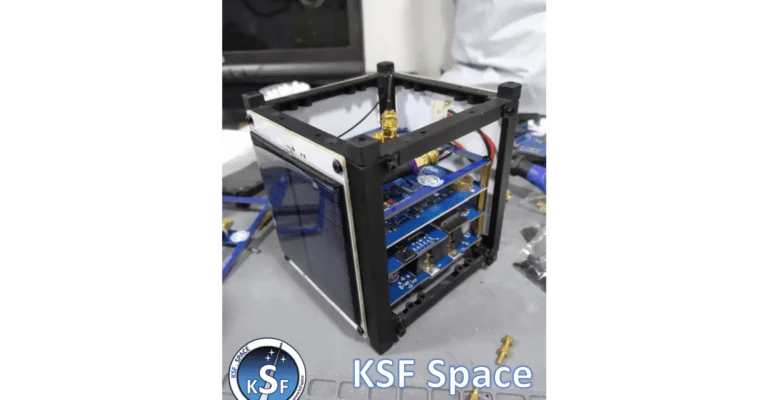
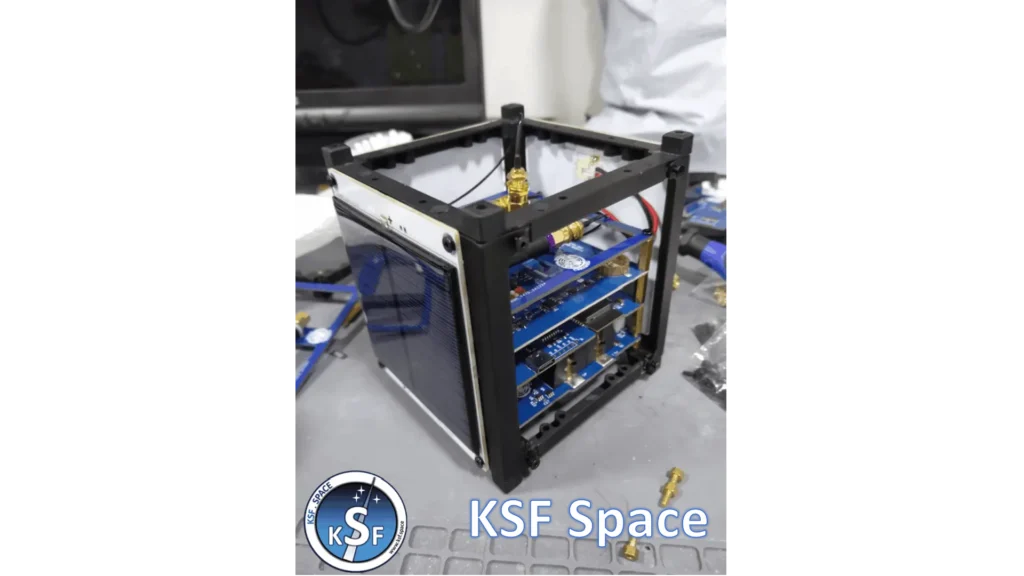
As educational institutions and research facilities globally race to deploy custom payloads into suborbital and low-Earth orbit (LEO) environments, the demand for cost-effective, adaptable, and highly reliable hardware solutions has escalated. Meeting this demand with precision, the KSF Space Foundation has introduced its breakthrough Cubesat kit version 2.0. Engineering-optimized as a “ready-to-fly” platform for suborbital missions, with built-in upgrade pathways for full orbital deployment, this specialized kit stands out as the most affordable solution on the global market.
Below, we provide an exhaustive, multi-dimensional technical review of modern nanosatellite development frameworks, focusing extensively on how KSF Space leverages optimized hardware engineering, comprehensive open-source frameworks, and specialized training programs to deliver unprecedented value to global aerospace pioneers.
1. Understanding the Foundations of Modern Cubesat Kit Design
To appreciate the structural breakthrough of the KSF Space architecture, one must first analyze the fundamental engineering challenges associated with nanosatellite development. Traditional satellite fabrication requires custom engineering for every deployment, introducing systemic variables that multiply development timelines and exponentialize failure rates. Standardized nanosatellite components change this calculus entirely by enforcing fixed physical envelopes and mechanical interdependencies.
The Mechanical and Structural Constraints of Standard Formats
Modern architectural standards dictate that a standard 1U nanosatellite must conform to precise physical parameters: a form factor of exactly 10 cm × 10 cm × 10 cm, with a mass budget strictly defined by launch vehicle dispensers. This standardized envelope guarantees that the satellite will interface flawlessly with commercial Deployers (P-PODs or equivalent mechanisms). When executing a Cubesat Kit Design, engineers must optimize structural rigidity while minimizing unladen mass.
The structural framework must withstand severe vibrational and acoustic forces during the launch phase. The mechanical stresses can be modeled using structural dynamic equations, where the fundamental resonance frequency f_n of the satellite structure must exceed the minimum requirements set by launch providers (typically f_n > 100\text{ Hz})) to avoid devastating destructive interference with the launch vehicle:
where k represents the structural stiffness matrix of the chosen frame geometry and m represents the total integrated mass. KSF Space Version 2.0 achieves an exceptional stiffness-to-mass ratio by utilizing aerospace-grade anodized aluminum alloys, ensuring that the primary chassis absorbs high vibrational loads while leaving maximum weight capacity for scientific instrumentation and experimental payloads.
Thermal and Environmental Resilience in Low-Earth and Suborbital Profiles
Outside the protective insulation of Earth’s dense atmosphere, satellites experience extreme thermal cycling. In suborbital profiles, the vehicle crosses high-altitude atmospheric regions where convective cooling transitions into purely radiative thermal equilibrium. In full low-Earth orbit, the satellite undergoes rapid transitions between solar radiation exposure and Earth-eclipse shadow zones, shifting temperatures from approximately -50°C to +80°C within minutes.
An effective Cubesat Kit Design mitigates these thermal gradients by planning precise thermal pathways. Passive thermal control—achieved through strategic surface coatings, specialized material selections, and isolation conductive standoffs—ensures that critical components like lithium-polymer batteries and primary processing microcontrollers remain consistently within their nominal operational temperature windows.
The Paradigm Shift of Version 2.0
The core philosophy driving the KSF Space Version 2.0 Cubesat kit is the elimination of structural ambiguity. By providing a baseline architecture that meets rigorous environmental thresholds out-of-the-box, research teams can reallocate their intellectual and financial assets away from structural troubleshooting and focus entirely on core mission execution and payload experimentation.
2. Demystifying the KSF Space Version 2.0: Technical Specifications and Core Features
The market for educational and professional small satellite kits has expanded, yet many offerings remain cost-prohibitive for small departments or rely on highly proprietary, closed-source ecosystems that limit educational utility. The KSF Space Version 2.0 addresses these operational pain points by balancing technical sophistication with the industry’s lowest entry cost.
Ready-to-Fly Suborbital Baseline Architecture
The Version 2.0 kit arrives as a complete, pre-engineered, ready-to-fly package calibrated specifically for suborbital carrier operations (such as high-altitude sounding rockets or stratospheric balloon platforms). This allows operational groups to rapidly validate their payload engineering, test operational sensors, and gather atmospheric data without waiting years for orbital launch slots. The chassis is pre-drilled and milled to standard PC104 board specifications, enabling seamless hardware stack integrations.
The Modular Pathway: Seamless Upgrades to Orbital Specifications
One of the most powerful features of the KSF Space Cubesat kit is its scalable operational trajectory. A primary barrier for university research groups is the sunk cost of purchasing separate hardware setups for preliminary atmospheric training and actual space missions. The KSF Space architecture eliminates this waste through its modular upgrade path.
While the baseline configuration is optimized for cost-effective suborbital environments, the primary structure and power distribution channels are designed to accept orbital-grade enhancements. By upgrading the thermal shielding components, integrating space-qualified solar panels, and appending an active Attitude Determination and Control System (ADCS) along with an S-band or UHF/VHF space transceiver, the exact same system transitions into a fully functional, space-hardened orbital satellite ready for LEO deployment.
Breaking Down the Hardware Component Ecosystem
Every KSF Space Version 2.0 system contains an array of highly integrated subsystems engineered to cooperate reliably under high-stress conditions:
- Structural Frame: A precision-milled, modular 1U aluminum framework supporting PC104 format stacks, featuring integrated deployment switches and deployment-rail interfaces.
- Electrical Power System (EPS): An intelligent power distribution board managing battery charging profiles, overcurrent protection circuits, and stable power rails (3.3V, 5V, and adjustable lines) to feed multiple onboard payloads.
- Onboard Computer (OBC): A low-power, high-reliability processing unit capable of running continuous flight state loops, managing multi-sensor data buses, and executing automated fault-detection sequences.
- Sensor Array: Integrated telemetry hardware measuring internal/external temperatures, multi-axis acceleration, barometric pressure, and magnetic field variations.
3. Software Architecture: Source Code, Real-Time Telemetry, and Programming Methods
Hardware is merely inert metal and silicon without an intelligent, highly responsive software layer. A major component of the KSF Space Cubesat Kit Design framework is its commitment to transparency, absolute control, and practical software training.
Open-Source Code Philosophy and Comprehensive Access
Unlike proprietary alternatives that lock codebases behind costly licensing agreements, KSF Space provides complete, unmodified access to the core flight software source code. This open architectural framework allows students and research teams to inspect every line of operational code, understand low-level hardware interactions, and modify flight parameters to match their custom payload profiles.
The primary codebase is structured around modular programming standards, ensuring that payload operations are completely isolated from critical flight-stabilization and telemetry loops. If an unverified user-developed payload script encounters an exception or memory leak, the primary flight control code isolates the fault, reboots the payload power rail, and preserves the primary telemetry link with Earth.
Advanced Real-Time Telemetry and Ground Station Software
The KSF Space kit includes dedicated, intuitive telemetry software that replicates industrial satellite ground operations. Operating over robust RF links, the software decodes downlinked data packets into actionable visual interfaces. The operational team can track real-time graphs displaying critical system health metrics:
| Telemetry Variable Category | Monitored Operational Parameters | Primary Engineering Purpose |
| Power Metrics | Bus voltage, charge currents, battery state-of-charge (SOC). | Prevents complete power depletion and manages payload operational duty cycles. |
| Thermal Health | OBC core temperature, battery pack temperature, external structural panel temps. | Triggers automatic heaters or down-regulates payload usage during extreme hot/cold phases. |
| Kinematics & Dynamics | 3-axis accelerometers, gyroscopic rotational velocities, magnetometer vectors. | Maps out vehicle trajectory, spinning behaviors, and altitude orientation characteristics. |
How to Code and Script for Your Nanosatellite Mission
Educational groups are guided step-by-step through the process of programming custom flight behaviors. The KSF Space programming curriculum covers the fundamentals of embedded systems development, moving from basic sensor polling to complex event-driven software architectures. Users learn to establish deterministic time loops, interact with standard communication buses (such as I2C, SPI, and UART), and compress telemetry packets to optimize data transmission across limited wireless bandwidths.
4. Bridging the Knowledge Gap: Guided Online Training and Step-by-Step Assembly Workshops
Purchasing a satellite kit can be an intimidating venture if a research department lacks seasoned aerospace professors. Recognizing that instructional guidance is just as critical as hardware reliability, KSF Space packages every Cubesat kit with structured, highly interactive online training sessions.
Comprehensive Structural Assembly Guidance
The assembly program functions as a live digital engineering lab. Guided by experienced aerospace engineers, students learn the exacting protocols of hardware integration. This training covers electrostatic discharge (ESD) safety procedures, precision torque specs for structural fasteners, cable harness management to eliminate mechanical interference, and proper hardware stack isolation. By instilling these professional standards early, the program significantly mitigates human error—the most common cause of premature system failures in early-stage satellite design.
Integrated Payload Integration Workshops
Once the baseline Cubesat Kit Design is successfully assembled, the curriculum shifts toward custom payload integration. Participants learn how to map out power budgets, design custom physical interfaces, and link sensor data streams into the primary flight controller software. This hands-on process turns theoretical aerospace concepts into a practical, repeatable engineering methodology.
Educational Empowerment Through Live Mentorship
By connecting student groups directly with real-world satellite developers, KSF Space bridges the traditional gap between textbook academic theory and real-world execution. The intensive online training sessions ensure that every institution, regardless of its prior aerospace heritage, can confidently execute a successful launch campaign.
5. The KSF Space Value Proposition: Unbeatable Pricing and Free NEP Certification
The most remarkable aspect of the KSF Space Version 2.0 ecosystem is its disruption of traditional market pricing models. By optimizing manufacturing workflows, employing reliable commercial off-the-shelf (COTS) components, and operating as a dedicated non-profit organization, KSF Space delivers a professional-grade satellite kit at a fraction of standard commercial costs.
Maximizing Limited Academic and Institutional Research Budgets
Academic departments and young research groups routinely struggle to secure large-scale grants, frequently pricing them out of high-end aerospace exploration. The unmatched affordability of the KSF Space Cubesat kit changes this funding dynamic entirely. Academic programs can now equip whole classrooms with functional hardware systems for the same budget previously required to purchase a single proprietary alternative. This cost efficiency transforms aerospace education from a passive, lecture-based seminar into an immersive, hands-on laboratory experience.
The Added Value of Free NEP Professional Certification
To further maximize the educational return on investment, KSF Space includes a highly valuable professional benefit: a free Nanosatellite Engineering Professional (NEP) certificate with every kit purchase. This professional credential certifies that the recipient has successfully completed the comprehensive engineering syllabus, mastered the fundamentals of Cubesat Kit Design, and demonstrated practical competence in embedded spacecraft programming, assembly, and telemetry systems.
For engineering students entering a highly competitive global job market, holding an externally verified NEP certification provides a massive career advantage. It proves to prospective employers across international aerospace agencies and private commercial enterprises that the applicant possesses direct, verifiable, hands-on experience managing standard satellite workflows from initial assembly through live mission simulation.
6. Step-by-Step Strategic Checklist for Launching Your First Mission
To assist academic and research teams planning their initial entry into space operations, KSF Space recommends a structured roadmap designed to maximize mission success metrics:
- Acquisition and Initial Unboxing: Secure the KSF Space Version 2.0 Cubesat kit and establish a clean, anti-static engineering workspace.
- Participate in Online Training: Enroll the student engineering team in the scheduled KSF Space online assembly and programming workshops.
- Structural Assembly & Validation: Assemble the core mechanical frame and execute initial power-on tests to verify the health of the primary EPS and OBC layers.
- Payload Code Integration: Script your specific scientific experiments using the provided modular open-source flight software framework.
- Simulated Testing Environment: Utilize the telemetry software suite to run exhaustive end-to-end mission simulations, validating system resilience under simulated thermal stress and prolonged data-transmission cycles.
- Earn Professional NEP Certification: Complete the rigorous testing requirements to secure the certified Nanosatellite Engineering Professional credentials for your team members.
- Launch Campaign Execution: Secure your suborbital carrier slot or integrate orbital upgrades to prepare your hardware stack for formal flight operations.
7. Conclusion: The Future of Hands-On Space Exploration Starts Today
The future of aerospace innovation belongs to those who actively dismantle the barriers of cost and complexity. By combining a reliable, high-performance, and scalable hardware design with accessible open-source flight code, professional ground station tracking tools, and comprehensive live technical mentorship, KSF Space has successfully redefined what an entry-level nanosatellite system can achieve.
Whether you are a university professor seeking to build a top-tier space engineering program, a research scientist deploying a custom atmospheric payload, or an aspiring aerospace engineer looking to validate your skills with a recognized industry credential, the KSF Space Version 2.0 provides the ultimate starting point. This platform proves that accessing space is no longer a matter of multi-million dollar budgets—it is simply a matter of vision, proper training, and engineered modular technology.
Initiate Your Space Project
Are you ready to deploy your own hardware and payload into suborbital or orbital environments? Contact the KSF Space engineering team today to secure the world’s most affordable, flexible Cubesat kit package and claim your free professional NEP certification.
- Official Technical Inquiries: info@ksf.space
- Web Platform: www.ksf.space
Academic & Scientific References
- Puig-Suari, J., Turner, C., & Ahlgren, W. (2001). Development of the standard CubeSat deployer and a design framework for university nanosatellites. IEEE Aerospace Conference Proceedings, 1, 225-232.
- Twiggs, R. J. (2003). Space systems engineering education at Stanford University with CubeSats. Journal of Space Mission Architecture, 2, 23-34.
- Woellert, K., Ehrenfreund, P., Ricco, A. J., & Hertzfeld, H. (2011). Cubesats: Cost-effective science and technology platforms for emerging space nations. Advances in Space Research, 47(10), 1639-1656.
- Chin, A., Sclater, N., & Wade, J. (2018). Open-source hardware paradigms and real-time telemetry systems in suborbital educational platforms. International Journal of Aerospace Engineering Education, 14(3), 112-125.