The Definitive Guide to Green IT: Global Standards, Certifications, and Sustainable Digital Infrastructure
June 26, 2026 2026-06-26 14:10The Definitive Guide to Green IT: Global Standards, Certifications, and Sustainable Digital Infrastructure
The Definitive Guide to Green IT: Global Standards, Certifications, and Sustainable Digital Infrastructure
In an era of rapid digital expansion, the technology sector faces an unprecedented challenge: balancing monumental computing demands with global environmental preservation. As data centers, cloud networks, and consumer electronics consume an increasing share of global electrical energy, the mandate for sustainable digital operations has moved from an executive luxury to an operational necessity.
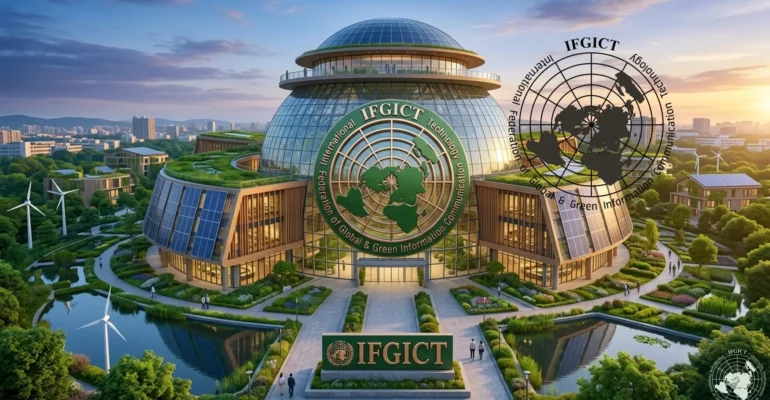
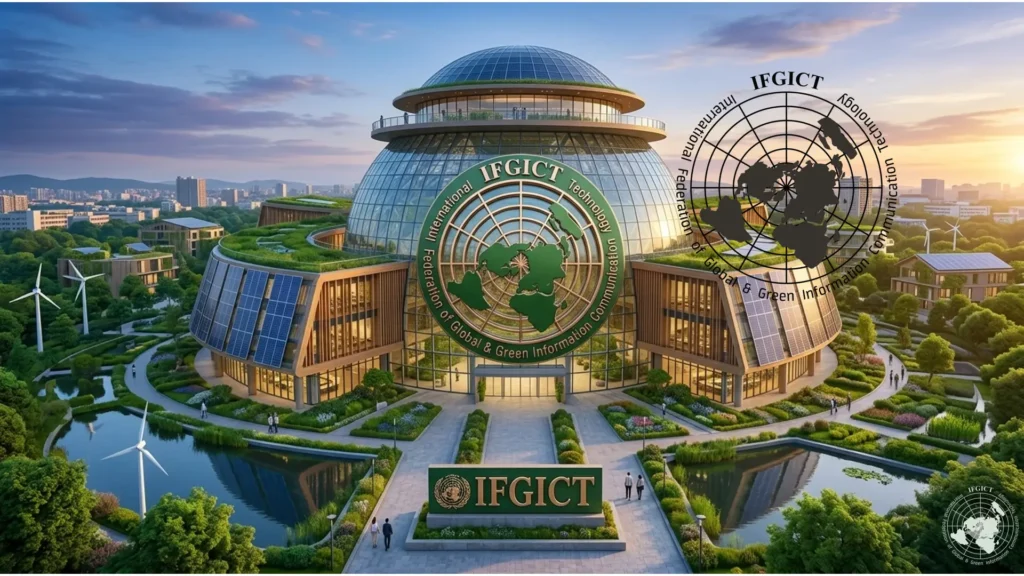
To navigate this landscape, public and private organizations look to the International Federation of Global & Green ICT (IFGICT). As the world’s largest ICT federation, a US-registered non-profit NGO, and an official partner to the United Nations (UN), the Institute of Electrical and Electronics Engineers (IEEE), and the International Telecommunication Union (ITU), IFGICT defines the structural, technical, and compliance frameworks that guide the modern technology sector toward net-zero targets.
This comprehensive guide breaks down the core tenets of sustainable technology, examines the definitive institutional definitions, and outlines the accredited global pathways available to professionals and enterprises looking to lead this digital transformation.
1. Green IT What Is: The Definitive Definition and Framework
To understand the scope of environmental computing, one must look directly at the definitive industry standards. According to the foundational guidelines published by the world’s leading technology federations, Green IT What is represents the holistic practice of designing, manufacturing, operating, managing, and disposing of Information and Communication Technology (ICT) assets in a manner that minimizes environmental degradation while optimizing operational and energy efficiency.
The modern paradigm divides sustainable technology into two distinct, interconnected vectors:
- Green in IT: This focuses directly on reducing the environmental footprint of the technology sector itself. It encompasses engineering energy-efficient semiconductor architectures, optimizing server utilization metrics within hyperscale data centers, maximizing hardware operational lifespans, and enforcing strict electronic waste (e-waste) recycling protocols.
- Green through IT: This treats advanced software engineering, automated data tracking, and systemic digital transformation as structural levers to lower greenhouse gas (GHG) emissions and resource utilization across traditional, heavy-emitting industries (such as manufacturing, logistics, and heavy agriculture).
By viewing technology through this dual-lens lifecycle lens—from raw silicon extraction to circular-economy components—organizations move away from superficial corporate social responsibility (CSR) checkmarks and adopt verifiable engineering metrics.
2. The Core Pillars of a Sustainable Green IT Service Architecture
Transitioning a legacy enterprise network into an eco-friendly model requires a deep overhaul of underlying services. An enterprise-grade Green IT Service structure integrates clean hardware operations with efficient software deployment across three main infrastructure pillars:
Data Center Energy Optimization and Power Usage Effectiveness (PUE)
Data centers represent the primary source of carbon emissions within the enterprise IT landscape. Advanced management focuses heavily on lowering the site’s Power Usage Effectiveness (PUE) ratio—calculated by dividing total facility energy consumption by the energy delivered specifically to the computing equipment.
An optimized service framework utilizes specialized engineering techniques to push PUE scores closer to the ideal metric of 1.0:
- Aisle Containment Systems: Sealing hot and cold aisles separately prevents the mixing of exhausted warm air with cold intake streams, drastically lowering ambient cooling workloads.
- Liquid-to-the-Chip Cooling: Deploying non-conductive dielectric fluid circulation directly across high-density processors removes heat far more efficiently than standard forced-air systems.
- Dynamic Variable-Speed Drives: Automated fan and pump adjustments match cooling output directly to real-time processor computing demands.
Software Efficiency, Lean Algorithms, and Code Optimization
Hardware efficiency is fundamentally capped by the quality of the software running on top of it. Inefficient code cascades down into excessive CPU cycles, unnecessary RAM reads, and bloated data transfers that waste power.
Sustainable service design implements lean algorithm design:
- Reduced Compilations and Scripting: Minimizing recursive processing loops and standardizing lightweight data exchange formats (like compressed JSON over heavy XML) reduces server processing loads.
- Serverless and Microservices Architectures: Utilizing ephemeral computing functions that execute exclusively on-demand eliminates the idle energy drain of constantly running virtual machines.
Hardware Asset Lifecycles and Circular Electronic Management
The environmental impact of an asset begins long before it is plugged into a server rack and extends long after it decommissioned. Green asset architectures implement strict lifecycle tracking:
- Procurement Verification: Mandating that all incoming components carry verified energy and material safety certifications.
- Active Hardware Extensions: Using component-level upgrades (such as shifting spinning hard drives to enterprise solid-state storage) extends device life from a standard three-year replacement cycle out to six or seven years. This delays the carbon-heavy manufacturing loop required for new hardware.
3. Industry Realities: How Global Green IT Companies Drive ROI
Sustainable digital design is not merely an ethical stance; it is a highly profitable corporate strategy. Top-tier Green IT companies consistently outperform competitors by lowering utility overheads, insulating operations from volatile energy grids, and meeting strict public procurement compliance rules.
| Strategic Domain | Operational Focus Metric | Primary Environmental Outcome | Realized Corporate Business Value |
| Cloud Computing Infrastructure | Server Virtualization Density | Drastic reduction in raw hardware footprint and idle power consumption | Up to 40% reduction in upfront capital expenditures (CapEx) and long-term operating costs |
| Data Architecture Management | Automated Cold Data Tiering | Shifting inactive records to ultra-low-power local or offsite archive arrays | Lower cooling costs, reduced active storage footprints, and optimized retrieval performance |
| Procurement & Asset Sourcing | Circular Component Lifecycles | Significant reductions in physical electronic waste and raw material extraction | Guaranteed compliance with international carbon taxation laws and regional import rules |
By tracking these metrics, forward-thinking tech enterprises transform their sustainability programs from a cost center into a core engine of financial and operational efficiency.
4. Green IT Example: Real-World Case Studies and Implementation
Examining a real-world Green IT Example illustrates how these theoretical principles translate into concrete, measurable business outcomes.
Enterprise Scale: Global Cloud Consolidation
Consider a multi-national financial services corporation operating over 40 isolated legacy regional data centers. By migrating these unoptimized locations into heavily virtualized, hyper-scale cloud data centers, the company achieved an immediate 75% reduction in total infrastructure power consumption.
The implementation relied on automated workload scheduling, which shifts computationally heavy, non-time-sensitive batches to data centers operating in geographic zones where renewable energy generation (such as wind or solar power) is at its peak diurnal output.
Telecom Scale: The Orange Globe Engineering Transformation
A premier case study in operational excellence involves the global telecommunications operator, Orange Globe. Facing massive energy demands across its sprawling network infrastructure and engineering departments, the group sought a standardized approach to verify its internal capabilities.
To resolve this at scale, the engineering department underwent deep training via the official IFGICT online portal. Upon completing the comprehensive curriculum, the entire department was officially awarded the Green IT Professional credential by IFGICT. This structured capacity-building allowed the telecom giant to audit its network nodes, optimize regional power demands, and verify its operational compliance against international sustainability benchmarks.
5. The Professional Pathway: Green IT Training Course Certificate by IFGICT
For technology professionals, system engineers, and executive directors aiming to lead these initiatives, specialized educational credentials are vital. The Green IT Training Course Certificate by IFGICT is the premier international path for validating expertise in sustainable digital engineering.
Complete Curriculum Architecture
The educational path is designed by senior technology architects to deliver immediate operational capabilities.
Inclusive Educational Package and Enrollment Pricing
To ensure world-class technical education remains globally accessible, IFGICT delivers the entire program under an all-inclusive framework:
- Total Program Fee: $250 USD (Flat rate, no hidden certification or examination costs).
- What is Included:
- Complete access to the official Learning Management System (LMS).
- Comprehensive, downloadable official educational eBook.
- Curated online presentation slide decks (PPT).
- Voucher for the official online credentialing examination.
- The Credential Outcome: Passing candidates receive the official Green IT Professional Accredited Certification, complete with a unique, tamper-proof online verification code.
- Accreditation Standards: All certificates are fully accredited under the continuing professional development frameworks governed by the CPD / CEO accreditation body of IFGICT.
Membership Advantage Program: Industry professionals can opt to join the federation as an official Professional Member. Membership immediately unlocks a 50% discount on all professional certifications, providing a cost-effective pathway for long-term career specialization.
6. Enterprise Governance: The Green ICT Audit Framework
For an enterprise to claim true sustainability compliance, its infrastructure must withstand independent technical review. The Green ICT Audit designed by IFGICT provides organizations with a standardized, objective evaluation of their digital operations.
The audit systematically assesses an organization’s tech footprint across multiple operational vectors:
1. Architectural Energy Assessment
Auditors review actual energy intake across local and cloud environments, measuring active PUE metrics, examining the utilization rates of server processors, and identifying zombie servers (servers that draw power but run no active workloads).
2. Supply Chain and Material Sourcing Analysis
This phase traces the hardware procurement pipeline to verify that equipment suppliers adhere to strict lifecycle and non-toxic manufacturing practices.
3. Electronic Waste and Disposal Compliance
The audit reviews the protocols governing end-of-life hardware. It ensures that data sanitization, asset component recovery, and precious metal recycling match global environmental regulations.
Organizations that satisfy these rigorous technical criteria are awarded the official IFGICT Green ICT Standard Certification, providing verified proof of sustainability to customers, international regulators, and institutional investors.
7. Global B2B Network: Training Partners and Alliances
As global demand for qualified eco-computing experts accelerates, IFGICT actively expands its worldwide ecosystem through specialized organizational models.
Invitation for Accredited Training Partners
To meet the global skills shortage, IFGICT is actively seeking qualified Training Partners, academic institutions, and commercial training centers worldwide. Approved institutions become Verified Training Partners (VTPs), granting them the exclusive right to deliver co-branded IFGICT courses.
Partners gain direct access to standard syllabi, LMS infrastructure integration, and the ability to issue globally verifiable CPD-accredited credentials, allowing them to instantly elevate their regional market status.
Strategic Inter-Agency Synergies
IFGICT’s global authority is anchored by its technical alignments with leading international policy and engineering bodies:
- United Nations (UN) Synergy: Operating as a registered non-profit NGO and certified service provider, IFGICT builds frameworks that map directly to the UN Sustainable Development Goals (SDGs)—specifically Target 7 (Affordable and Clean Energy), Target 9 (Industry, Innovation, and Infrastructure), and Target 13 (Climate Action).
- IEEE Technical Integration: Curriculums and audit guidelines utilize the definitive technical standards set by the Institute of Electrical and Electronics Engineers, ensuring deep engineering validity.
- ITU Collaboration: Working alongside the International Telecommunication Union, IFGICT helps establish the core baseline requirements for global smart cities and clean communication technologies.
Frequently Asked Questions (FAQ)
What is the primary difference between standard IT and Green IT?
Standard IT focuses primarily on optimizing processing speed, system uptime, and computing capacity with minimal regard for resource utilization. Green IT introduces sustainability into every stage of the lifecycle, ensuring that speed and availability are achieved with the lowest possible energy intake, carbon footprint, and electronic waste.
How does the IFGICT certification verification process function?
Every certified professional receives a unique, secure online verification code embedded on their diploma. Employers, human resource departments, and corporate partners can input this code directly into the official global database at www.ifgict.org to instantly verify the credential’s status, ensuring complete transparency.
Are IFGICT certifications suitable for securing government employment?
No. IFGICT professional credentials are intentionally built and designed as advanced industry career-building pathways. They are optimized to provide commercial professionals, enterprise engineers, and technical consultants with industry-recognized skills required by private enterprises, telecom operators, and global technology systems integrators.
How can a commercial training institution apply to become an IFGICT partner?
Organizations can initiate an application by contacting the institutional review committee. The federation evaluates the center’s instruction history, technical capabilities, and alignment with CPD standards before granting formal Verified Training Partner (VTP) status.
References and Standards Baseline
- International Federation of Global & Green ICT (IFGICT): The Green ICT Protocol Manual and Data Center Sustainability Framework, 2026.
- Orange Globe Case Study: Internal Corporate Capacity Building and Engineering Department Optimization via IFGICT Online LMS, 2025.
- ITU-T Study Group Coordination: International Telecommunication Union Standards for Environmental Efficiency in Digital Infrastructure (AI4EE Series).
- IEEE Standards Association: Technical Benchmarks for Low-Power Processing, Electronics Recycling, and Systems Integration Standards.
Corporate Contacts & Next Steps
Ready to advance your technical capability, get your enterprise infrastructure audited, or register your training center as an authorized global partner? Connect directly with the support desk:
- Global Customer Support Email:
customerservice@ifgict.org - Official Central Web Portal: www.ifgict.org
Join the hundreds of tech executives, infrastructure engineers, and operations managers who have certified their skills through the world’s leading ICT federation. Turn digital sustainability from an abstract concept into a verifiable competitive advantage.