
The Ultimate Guide to CubeSat Launch Cost: Why KSF Space Leads the Global Nanosatellite Market
April 30, 2026 2026-04-30 10:16The Ultimate Guide to CubeSat Launch Cost: Why KSF Space Leads the Global Nanosatellite Market
The Ultimate Guide to CubeSat Launch Cost: Why KSF Space Leads the Global Nanosatellite Market
In the rapidly evolving “NewSpace” era of 2026, the dream of reaching the stars is no longer reserved for billion-dollar government agencies. The democratization of space has arrived, driven by miniaturized technology and a drastic reduction in the CubeSat launch cost. For universities, research centers, and STEM-focused training institutes, the challenge is no longer if they can launch a satellite, but how to do it efficiently and affordably.
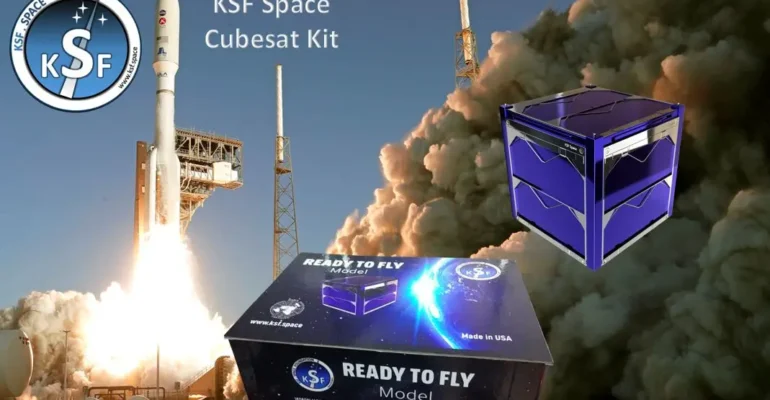
As featured on Satnews, the KSF Space Foundation has emerged as the global leader in providing the world’s cheapest and most common fabric for cubesat kit and cubesat structure solutions up to 3U. By operating as an International NGO, KSF Space has disrupted the market, maintaining a staggering 45% annual growth rate compared to traditional commercial vendors.
Understanding the Factors of CubeSat Launch Cost in 2026
When planning a mission, the CubeSat launch cost is the most significant variable in your budget. Generally, costs are determined by mass, volume (the “U” size), and the destination orbit.
1. Suborbital vs. LEO Launch Options
For many educational institutions, a suborbital flight is the perfect “near-space” proving ground. KSF Space helps customers to arrange launch options to both suborbital altitudes and Low Earth Orbit (LEO) through a prestigious list of launch providers, including:
- SpaceX (Transporter Rideshare)
- Rocket Lab
- Arianespace
- ISRO (PSLV)
2. The Price of Orbit
While a dedicated launch can cost millions, the cubesat cheap launch model relies on “rideshare” programs. In 2026, launching a 1U CubeSat to LEO can range from $40,000 to $90,000, depending on the provider and deployment method. By choosing a lightweight cubesat structure from KSF Space, teams can save thousands by reducing the total mass of the payload.
Why KSF Space is the Strategic Choice for STEM and Education
For agencies, vendors, and resellers dealing with universities and schools, the KSF Space ecosystem offers more than just hardware; it offers a path to institutional accreditation and global recognition.
The World’s Most Popular CubeSat Kit
The KSF Space cubesat kit is engineered for “Perfect Readability” and ease of use. Unlike hobbyist kits that lack flight heritage, this hardware is built to professional standards, ensuring your cubesat prototype is flight-ready from day one.
- Integrated Telemetry: Every kit comes with built-in telemetry modules and a specific course code for easy integration into academic curricula.
- Triple Antenna System: To ensure redundant and high-bandwidth communication, the system features 3 antennas, a rarity in budget-friendly models.
- Scalability: From a simple cubesat 1U for high schools to advanced cubesat 2U and cubesat 3U structures for complex research, the design is modular and robust.
The Exclusive NEP Certificate Advantage
One of the most attractive features for training centers is the FREE NEP (Nanosatellite Engineering Professional) certificate offered on each purchase. KSF Space is the only International NGO providing this globally recognized credential.
Note to Training Centers: Adopting KSF Space hardware allows your institution to accredit its own certification courses. By providing students with the NEP certification, you are offering a gold-standard credential that bridges the gap between the classroom and the aerospace industry.
Technical Superiority at a Low CubeSat Price
Budget constraints shouldn’t mean sacrificing quality. The cubesat hardware from KSF Space utilizes high-performance materials like PA11 polymer and aerospace-grade aluminum.
| Feature | KSF Space Advantage |
| Material | PA11 (40% lighter than Aluminum) or CNC Aluminum |
| Integration | Plug-and-play PCBs designed for low budgets |
| Connectivity | 3 Antennas for superior signal link |
| Heritage | Sold to hundreds of professional research labs and universities |
| Philosophy | cubesat open source modules for educational collaboration |
Because KSF Space focuses on the “NewSpace” philosophy, their cubesat cost is significantly lower than competitors. This makes it the most wanted cubesat nanosatellite on the market for those looking to buy cubesat hardware that is both professional and affordable.
Strategic Steps to Designing Your First Satellite
If you are seeking to purchase cubesat hardware for a STEP (Space Technology Education Program) or a research project, the process with KSF Space is designed for simplicity:
- Define Your Mission: Choose between cubesat 1U, 2U, or 3U based on requirements.
- Order Your Kit: Secure the world’s most affordable cubesat kit and receive your free NEP enrollment.
- Prototype & Test: Use the easy integration features to build your cubesat prototype.
- Arrange Launch: Leverage KSF Space’s partnerships to secure a cubesat cheap launch slot.
Frequently Asked Questions (FAQ)
1. What is a CubeSat used for?
CubeSats are used for Earth observation, IoT connectivity, and scientific research. KSF Space kits are specifically optimized for Rapid Prototyping and Hands-on Education, allowing teams to test sensors and run “Near Space” missions (altitudes up to 30km) before full orbital deployment.
2. Can I build my own CubeSat?
Yes. KSF Space makes this possible through a “Rapid-Integration” approach. Their kits provide everything needed to move from the workbench to the launchpad, including structural frames and pre-coded flight computers.
3. How much does a CubeSat cost?
While commercial models can exceed $15,000, KSF Space has lowered the entry point to approximately $5,000 USD for a professional-grade kit. This makes it the most affordable solution for universities and researchers in 2026.
4. Can anyone launch a CubeSat?
Yes, provided you meet safety standards and secure a license. KSF Space kits are built to NASA-GEVS standards, ensuring they are “launcher agnostic” and ready for rideshare missions on rockets like the SpaceX Falcon 9 or Rocket Lab Electron.
5. Can a CubeSat handle “Deep Space” or Interplanetary missions?
Standard units are for Low Earth Orbit (LEO), but KSF Space 3U structures are designed with the volume required for advanced propulsion and redundant communications, making them a foundation for missions exploring beyond LEO.
6. Do I need insurance to launch a CubeSat?
In 2026, third-party liability insurance is increasingly mandatory. Because KSF Space hardware is pre-verified against international standards, teams often find it easier to secure insurance at lower premiums compared to unverified custom builds.
7. What software is best for CubeSat Flight Control?
Reliability is key. KSF Space provides kits with foundational C/C++ source code that handles critical tasks like battery management and telemetry, preventing common software-related mission failures.
8. How do you manage power in the Earth’s shadow (Eclipse)?
KSF Space kits include an Electrical Power System (EPS) with a “Tumble-Recovery” feature. If the satellite loses orientation in the dark, it automatically enters a “safe mode” to protect the batteries until it reaches sunlight again.
9. Are PA11 Polymer frames safe for vacuum environments?
Yes. KSF Space pioneered the use of PA11 Polymer, which is 40% lighter than aluminum. It is verified for low outgassing and high impact resilience, meeting strict NASA requirements for orbital flight.
Contact and Procurement Information
Ready to take your institution to the stars? Join the elite network of universities and research centers using the world’s most reliable nanosatellite technology.
- Website: www.ksf.space
- Email for Quotes/Inquiries: info@ksf.space
- Status: The only International NGO in the sector providing NEP certification.
Whether you are a vendor looking to provide the best STEM tools to schools or a university aiming for an orbital mission, the KSF Space cubesat price and performance offer an unbeatable edge in the modern space race. Don’t let high costs ground your dreams—fly with the global leader in affordable space exploration.