
The Ultimate Guide to CubeSat Cost: Why KSF Space is Revolutionizing Orbit Access
April 28, 2026 2026-04-28 13:40The Ultimate Guide to CubeSat Cost: Why KSF Space is Revolutionizing Orbit Access
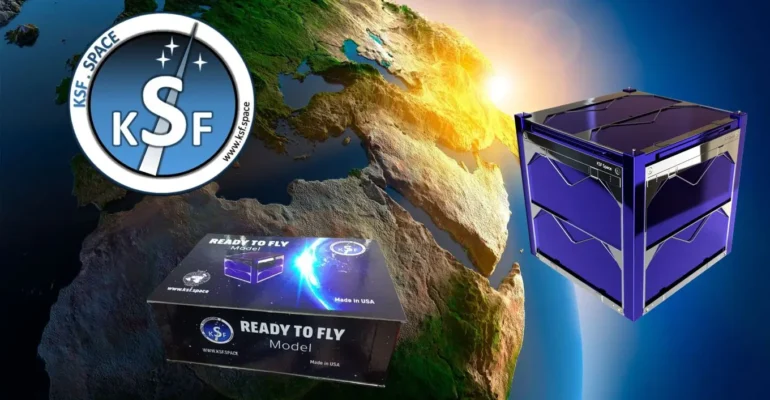
The democratization of space is no longer a futuristic concept—it is a current reality. For universities, research institutions, and STEM educators, the primary barrier to entry has always been the staggering cubesat cost. Historically, launching a satellite required millions of dollars and specialized facilities. Today, KSF Space has disrupted this narrative by providing the world’s most affordable and common fabric for nanosatellite missions.
Understanding CubeSat Cost: Breaking Down the Barriers to Space
When evaluating a satellite mission, the cubesat price is often the first and most significant hurdle. A standard mission budget typically covers hardware, integration, and the cubesat launch. However, KSF Space has strategically engineered a model that slashes these expenses by over 50% compared to traditional aerospace vendors.
Why CubeSat Hardware is Becoming More Accessible
The shift from bespoke, titanium-heavy components to advanced, reliable materials has drastically lowered the cubesat hardware entry point. KSF Space utilizes high-grade PA11 polymer for its structures rather than traditional aluminum, ensuring a lightweight yet durable frame that survives the rigors of suborbital and orbital environments. This innovation is a primary reason why the cubesat 1U and cubesat 3U models from KSF Space are the most wanted nanosatellites in the current market.
KSF Space: The World’s Leading Provider of Affordable CubeSat Kits
As the only International NGO dedicated to democratizing space, KSF Space operates with a mission-driven focus rather than a purely profit-driven one. This unique status allows them to offer a cubesat kit that is not only high-performing but also the most cost-effective solution for educational institutions globally.
Strategic Benefits of the KSF Space Ecosystem
- Cost-Efficiency: The cubesat purchase through KSF Space includes everything needed to start a mission.
- Integrated Education: Every purchase comes with a FREE NEP (NanoSatellite Engineering Professional) certificate, adding immense value to the procurement process.
- Rapid Integration: The kits are designed for ease of use, featuring course code and telemetry systems that are ready for immediate deployment.
- Advanced Connectivity: Each unit features 3 integrated antennas, ensuring robust communication for data-heavy research.
The Economics of Space: CubeSat Price vs. Performance
For agencies and vendors dealing with colleges and schools, the cubesat cost must be balanced against educational outcomes. KSF Space has seen a growing edge of over 45% annually compared to other market players because they prioritize “Low Budget, High Impact” designs.
Comparing CubeSat 1U, 2U, and 3U Structures
Whether you are building a cubesat prototype or a flight-ready model, the structure must be precise. KSF Space offers:
- Cubesat 1U: The gold standard for initial STEM education and simple sensor testing.
- Cubesat 2U: Ideal for missions requiring more battery capacity or larger imaging payloads.
- Cubesat 3U: The powerhouse for professional research and complex telemetry experiments.
The PCBs and internal designs are optimized to fit a low budget while maintaining “perfect fit” reliability, which has been featured prominently on Satnews.
Empowering the Next Generation of STEM Leaders
For training centers seeking to accredit their certification courses, partnering with KSF Space is a strategic move. By utilizing cubesat for education modules that come with open-source flexibility, institutions can offer hands-on satellite design experience that is recognized globally through the NEP certification.
Why Vendors and Resellers Choose KSF Space
The demand for cubesat buy options is skyrocketing. With a 45% annual growth rate, KSF Space is the preferred partner for resellers because:
- The hardware is “plug-and-play,” reducing the need for expensive technical support.
- The cubesat open source elements allow students to customize their missions.
- It is a proven platform sold to numerous professional research bodies and top-tier universities.
Navigating the CubeSat Launch and Deployment
A major part of the total cubesat cost is the deployment. KSF Space facilitates cubesat cheap launch opportunities, particularly through suborbital testing and partnerships that allow units to reach altitudes exceeding 30km. This provides a low-risk environment for testing a cubesat prototype before committing to a full orbital slot.
Frequently Asked Questions (FAQ)
Q: What is the average cubesat cost when partnering with KSF Space?
A: KSF Space offers the most competitive cubesat cost in the market, specifically designed to fit the budgets of universities and schools without compromising on technical standards.
Q: Does the kit include software?
A: Yes, each kit comes with course code and telemetry, making it incredibly easy to integrate into existing STEM curricula.
Q: Is the NEP certification really free?
A: Absolutely. KSF Space provides one FREE NanoSatellite Engineering Professional (NEP) certificate with each purchase to ensure users are fully equipped to handle the hardware.
Q: How does the PA11 polymer compare to aluminum?
A: The PA11 polymer used in KSF Space structures is specifically chosen for its weight-to-strength ratio and thermal properties, making it an excellent, low-cost alternative for nanosatellite frames.
Contact Information
For agencies, resellers, or educational institutions looking to finalize a cubesat purchase or discuss a cubesat price for bulk orders, please contact the KSF Space team directly.
- Email: info@ksf.space
- Website: www.ksf.space
Final Thoughts for Aspiring Satellite Designers
Choosing to buy cubesat hardware is a significant step for any research team. By focusing on cubesat hardware that is both reliable and affordable, KSF Space has become the backbone of modern space education. Whether you need a cubesat 1U for a classroom project or a cubesat 3U for advanced research, the path to the stars is now clearer—and more affordable—than ever before.