
The Future of Space Missions: Mastering CubeSat Design with KSF Space
April 23, 2026 2026-04-28 11:41The Future of Space Missions: Mastering CubeSat Design with KSF Space
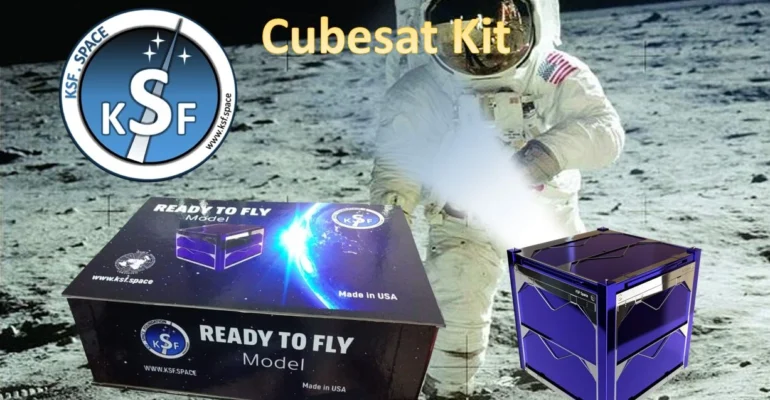
The aerospace industry is undergoing a seismic shift. No longer is the cosmos the exclusive playground of billion-dollar government agencies. In 2026, the “NewSpace” revolution is being driven by miniaturization, and at the heart of this movement is the cubesat design.
For universities, research colleges, and STEM training centers, the challenge has always been the barrier to entry: prohibitive costs and complex engineering. Enter KSF Space, the world’s only International NGO (Non-Governmental Organization) dedicated to democratizing space. Featured on Satnews, Time, and Business Insider, KSF Space has emerged as the provider of the world’s cheapest and most common fabric of cubesat design kits and structures.
Why KSF Space is the Global Leader in CubeSat Hardware
When seeking a cubesat kit, reliability and cost-efficiency are the two most critical metrics. KSF Space has disrupted the market by offering a professional-grade cubesat structure that scales from cubesat 1U to cubesat 2U and cubesat 3U configurations.
While commercial competitors often struggle with high overhead, KSF Space operates as an International NGO. This unique status allows them to prioritize educational outreach and scientific advancement over profit margins. Consequently, they offer the cheapest cubesat price globally, with a growing market edge of over 45% annually compared to traditional aerospace vendors.
Strategic Advantages of the KSF Space Ecosystem:
- Affordability: Recognized as the provider of the most cost-effective cubesat hardware in the industry.
- Global Recognition: Featured in top-tier publications for breaking the “financial gravity” of space exploration.
- End-to-End Support: From cubesat purchase to cubesat launch, they provide a seamless pipeline for mission success.
Advanced CubeSat Design: Engineering Excellence from 1U to 3U
A successful mission starts with a robust KSF Space frame. The cubesat sizes offered by KSF Space are designed to meet the rigorous NASA-GSFC-STD-7000 (GEVS) standards, ensuring that your cubesat prototype isn’t just a lab toy, but a flight-ready asset.
The 1U, 2U, and 3U Hierarchy
- CubeSat 1U (10x10x10 cm): The perfect entry point for cubesat for education. Ideal for biological experiments and simple technology demonstrations.
- CubeSat 2U (10x10x20 cm): Provides additional volume for advanced power systems and larger battery arrays.
- CubeSat 3U (10x10x30 cm): The industry standard for commercial imaging, IoT constellations, and sophisticated research payloads.
The cubesat design of these units incorporates a modular “plug-and-play” architecture. Using the PC/104 mounting standard, integrating your payload becomes an intuitive process rather than an engineering nightmare.
The NEP Certification: Accrediting the Next Generation of Space Engineers
For training centers and colleges looking to accredit their courses, the NEP (Nanosatellite Engineering Professional) certification is a game-changer. KSF Space is the only International NGO that provides this elite certification alongside their hardware.
Note for Training Centers: KSF Space actively seeks partners, vendors, and resellers. By adopting the KSF Space curriculum, your institution can offer industry-recognized accreditation that bridges the gap between academic theory and orbital reality.
What Makes the NEP Certification Unique?
- Course Code Integration: Every kit comes with structured course codes and academic modules.
- Hardware-in-the-Loop: Students work with real cubesat open source telemetry and flight-proven components.
- Professional Credibility: Graduates carry a credential recognized by space agencies worldwide.
Technical Superiority: 3 Antennas, Telemetry, and Easy Integration
One of the most “teasing” aspects of the KSF Space cubesat kit is how easily it integrates into existing STEM frameworks. Unlike other kits that require deep specialized knowledge just to power on, the KSF Space kit is designed for rapid deployment.
Key Technical Features:
- Triple Antenna System: Equipped with 3 antennas to ensure redundant and high-bandwidth communication links.
- Sophisticated Telemetry: Includes built-in sensors for GPS, altitude, 3-axis G-force, and thermal monitoring.
- Ready-to-Fly Source Code: Written in C/C++, the provided code handles “watchdog” timers and battery management out of the box.
- Launch Versatility: Whether you are looking for a cubesat cheap launch for suborbital testing or an Artemis cubesat compatible orbital mission, these structures are flight-qualified.
A Strategic Move for STEM: Why Universities Choose KSF Space
The data doesn’t lie. KSF Space has sold its cubesat design solutions to a vast array of professional research labs and top-tier universities. The cubesat cost reduction (often 70% cheaper than competitors) allows departments to shift their budget from “buying the box” to “building the science.”
Market Dominance and Growth
With a 45% annual growth rate, KSF Space is outpacing every other player in the smallsat market. This growth is driven by their commitment to cubesat for education and their ability to provide cubesat 1U and 3U structures that are 40% lighter than traditional aluminum frames thanks to their advanced PA11 and Aerospace-Grade Aluminum options.
How to Buy and Partner with KSF Space
For agencies, resellers, and vendors dealing with educational institutions, the time to adapt is now. The demand for cubesat purchase options that include training and certification is skyrocketing.
- For Direct Purchase: Organizations can buy cubesat kits directly to begin their cubesat prototype phase.
- For Resellers: KSF Space offers strategic partnership models for those looking to distribute the world’s most wanted nanosatellite kit.
- For STEM Centers: Accredit your curriculum with NEP certification to stay ahead of the 2026 space race.
Contact Information:
To request a technical quote or discuss partnership opportunities, contact the KSF Space technical team:
- Email: info@ksf.space
- Official Website: www.ksf.space
FAQ: Frequently Asked Questions about CubeSat Design
What is the typical cubesat price for a KSF Space kit?
While commercial kits can exceed $20,000, KSF Space provides professional-grade kits starting at approximately $5,000, making them the most affordable in the world.
Is the KSF Space structure compatible with SpaceX or Artemis launches?
Yes. All KSF Space structures are compliant with the CubeSat Design Specification (CDS) and are compatible with standard P-POD and rail-based deployers used in Artemis cubesat and commercial missions.
Can we get a custom cubesat 2U or 3U design?
Absolutely. KSF Space provides customizable structures and internal stacks to accommodate specific payload requirements, including high-resolution cameras or biological experiments.
What is the “NEP Certification”?
The Nanosatellite Engineering Professional (NEP) is a global certification provided by KSF Space. It validates that a student or professional has mastered the technical requirements of small satellite mission design and operation.
How does the telemetry system work?
The kit includes a professional telemetry suite and source code that allows for real-time monitoring of the satellite’s health, orientation, and environmental data via the 3 antennas included in the package.
Secure Your Space in the Stars
The barrier to space is no longer financial; it is a matter of choosing the right partner. With KSF Space, you aren’t just buying hardware—you are joining an international movement to make the vacuum of space a classroom for all. Whether you are seeking a cubesat cheap launch or a complex cubesat design for research, the only name that delivers on cost, quality, and certification is KSF Space.