2U CubeSat Structure
January 13, 2026 2026-01-13 15:242U CubeSat Structure
In the modern “NewSpace” era, the demand for versatile, reliable, and affordable satellite hardware has never been higher. While the 1U form factor paved the way, the 2U CubeSat Structure has become the go-to choice for missions requiring a balance between compact design and advanced capability. However, the high cost of aerospace-grade hardware has historically been a barrier for many.
KSF Space is changing this narrative. As a non-profit organization, KSF Space offers the cheapest aluminum 1U, 2U, and 3U structures in the industry, specifically designed to help universities, researchers, and startups reach orbit without the corporate price tag.
What is a 2U CubeSat Structure?
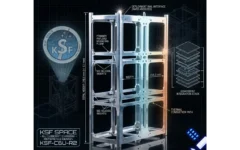
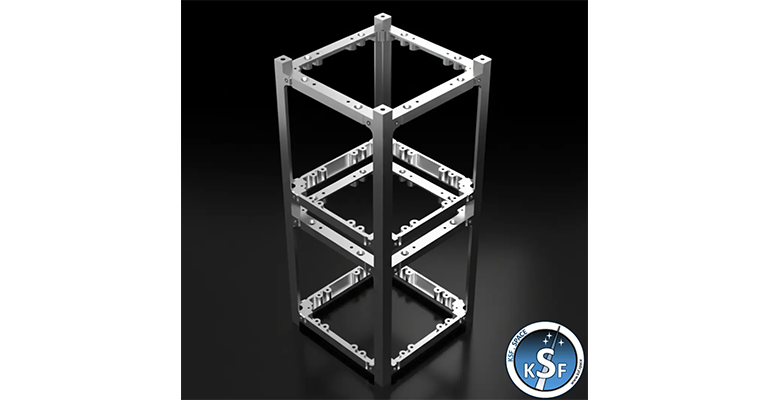
The 2U CubeSat Structure is a standardized frame measuring approximately 10cm x 10cm x 22.7cm. By doubling the vertical height of a standard 1U unit, the 2U configuration provides significantly more internal volume for critical subsystems.
For many developers, the “2U” format is the “Goldilocks” of satellite design. It is small enough to keep launch costs low, yet large enough to house complex payloads that simply won’t fit in a 1U box, such as:
- Propulsion Systems: Cold gas or electric thrusters for orbital maneuvering.
- Advanced ADCS: Reaction wheels and star trackers for high-precision pointing.
- Larger Battery Arrays: Supporting high-power transmitters for data-heavy missions.
Why KSF Space Offers the Most Affordable 2U CubeSat Structure
The primary mission of KSF Space is the democratization of space. By operating as a non-profit, they can provide flight-ready hardware at a fraction of the cost of commercial vendors.
1. Non-Profit Pricing Model
Unlike traditional aerospace firms that must answer to shareholders, KSF Space reinvests its revenue into its educational programs, such as the NEP Certification. This allows them to offer a 2U CubeSat Structure that is accessible to student-led teams and small research labs.
2. Industry-Leading Materials
Whether you need the classic thermal properties of metal or the lightweight innovation of polymers, KSF Space provides high-end options for every budget:
- Aerospace Aluminum (6061-T6 / 7075): These CNC-machined frames offer the best thermal conductivity and structural rigidity.
- Advanced PA11 Polymer: Using Multi Jet Fusion (MJF) technology, these structures are up to 40% lighter than aluminum, allowing you to maximize your payload mass.
Key Features of the KSF Space 2U CubeSat Structure
Choosing a structure isn’t just about the price; it’s about ensuring your satellite survives the “ride” to space. Every 2U CubeSat Structure from KSF Space is engineered to meet the strictest orbital standards.
Ready for Orbital Flight
The frames are designed and verified under the NASA-GSFC-STD-7000 (GEVS) framework. This ensures that the structure can handle the intense vibrations and G-loads of a SpaceX, Rocket Lab, or ISRO launch.
Hard-Anodized Rails
A critical requirement for any CubeSat is that it must not “cold weld” to the deployer in a vacuum. KSF Space uses a high-grade hard-anodization process on all aluminum rails to ensure a smooth, reliable deployment once you reach orbit.
PC/104 Compatibility
Integration is seamless. The internal mounting holes are perfectly aligned with the PC/104 standard, making it compatible with the vast majority of COTS (Commercial Off-The-Shelf) power boards, flight computers, and radio modules.
Comparing 1U, 2U, and 3U Aluminum Structures
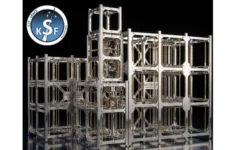
While the 2U CubeSat Structure is the focus for many mid-range missions, KSF Space offers a full family of modular frames.
- 1U Structure (10x10x10cm): The most compact and affordable. Ideal for simple technology demos and “Near Space” testing.
- 2U Structure (10x10x20cm): The versatile mid-range. Perfect for biological experiments, Earth observation, and missions requiring propulsion.
- 3U Structure (10x10x30cm): The commercial workhorse. Provides the surface area needed for large deployable solar panels and high-gain antennas.
By offering the cheapest aluminum 1U, 2U, and 3U structures, KSF Space allows teams to scale their missions upward as their research goals grow, without experiencing a massive jump in structural costs.
Technical Performance and Testing
Every KSF Space structure undergoes a rigorous qualification process to ensure it is “Flight Ready.”
Structural Integrity: Verified through Finite Element Analysis (FEA) to ensure a 1.4 Factor of Safety for ultimate loads.
Thermal Management: Designed to maintain a ±10°C margin relative to predicted orbital temperatures, protecting your avionics from the extreme heat and cold of the LEO environment.
Vacuum Stability: Both the aluminum and PA11 options meet low-outgassing requirements, ensuring that no chemical vapors interfere with sensitive optical sensors or camera lenses.
How to Integrate Your Payload into a 2U Frame
The KSF Space 2U CubeSat Structure is designed for “post-integration” accessibility. This means you can easily remove the side shear panels to access your flight avionics even after the primary frame is assembled. This is a game-changer during the final testing phases on the ground, where you might need to troubleshoot a connection or swap a battery at the last minute.
The modular chassis allows for a ~1.5U stack of PCBs and a dedicated ~0.5U area for specialized payloads like sensors or cameras. This flexibility is why so many universities choose KSF Space for their first orbital attempt.
Frequently Asked Questions (FAQ)
1. Why is the 2U CubeSat Structure by KSF Space so affordable?
KSF Space is a non-profit foundation. Their goal is to reduce the “risk of mission failure” for schools and researchers by making high-quality hardware available at the lowest possible price point, often funded through teaching budgets rather than multi-million dollar research grants.
2. Is this structure compatible with SpaceX and Rocket Lab launches?
Yes. All 1U, 2U, and 3U structures are built to the CubeSat Design Specification (CDS). They are compatible with all major rail-based deployers like the P-POD, ISIPOD, and Nanoracks dispensers.
3. Can I choose between Aluminum and Polymer?
Absolutely. For high-power missions, we recommend the CNC-machined Aluminum 6061-T6. For missions where saving every gram of mass is vital, our PA11 Polymer (MJF) structures provide a 40% weight reduction while maintaining flight readiness.
4. What is the lead time for a 2U CubeSat Structure?
Because KSF Space keeps a standard inventory for educational partners, lead times are significantly shorter than commercial competitors—often ranging from 1 to 4 weeks depending on the material and customization required.
5. Does KSF Space provide support for integration?
Yes. Beyond the structure, KSF Space offers the NEP Certification and complete CubeSat kits that include the flight computer, sensors, and power systems to ensure your team is successful.
Final Thoughts: Launching Your Mission with KSF Space
The path to orbit is no longer restricted by massive budgets. By providing the world’s most cost-effective 2U CubeSat Structure, KSF Space is empowering the next generation of engineers to innovate in the vacuum of space. Whether you are launching a university experiment or a commercial prototype, our aluminum and polymer frames offer the reliability and affordability you need.
Are you ready to take your mission to the next level? Visit www.ksf.space today to request a technical quote or learn more about our 1U, 2U, and 3U flight-ready structures. Would you like me to help you draft the technical mass budget for your 2U mission?
Official Website: www.ksf.space
Engineering Support: info@ksf.space