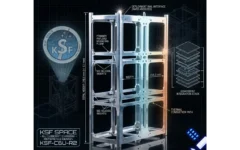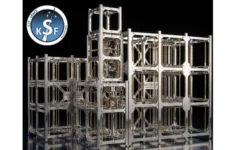
CubeSat Structure
January 13, 2026 2026-01-13 15:07CubeSat Structure
In the rapidly evolving landscape of NewSpace, the Cubesat Structure serves as the literal backbone of every mission. Whether you are a university research team or a commercial startup, the structural integrity of your nanosatellite determines its survival during the violent vibrations of launch and the extreme thermal cycles of Low Earth Orbit (LEO).
KSF Space, a leading non-profit organization, has revolutionized this sector by offering the most affordable, flight-ready Cubesat Structure kits in the world. By focusing on democratizing space access, KSF Space provides high-quality aluminum 1U, 2U, and 3U frames that meet the rigorous standards of NASA and ESA without the prohibitive “space-grade” price tags.
What is a Cubesat Structure and Why is Material Choice Critical?
A Cubesat Structure is the mechanical frame that houses all internal subsystems, including the On-Board Computer (OBC), Power Management Systems (EPS), and specialized payloads. While various materials have been tested in orbit, Aluminum 6061-T6 and 7075 remain the industry gold standard for several reasons:
- Strength-to-Weight Ratio: Aluminum provides the rigidity needed to withstand 10G+ launch loads while remaining light enough to minimize launch costs.
- Thermal Conductivity: In the vacuum of space, heat can only be dissipated through radiation or conduction. An aluminum Cubesat Structure acts as a massive heat sink, protecting sensitive electronics from overheating.
- Radiation Shielding: Metal frames offer a baseline of protection against high-energy particles that can cause bit-flips in unshielded electronics.
- Anti-Cold Welding: KSF Space utilizes hard-anodized rails to ensure that the satellite does not fuse to the deployer (P-POD) in the vacuum of space.
For those looking for even lighter options, KSF Space also innovates with PA11 polymer structures, which offer a 40% mass reduction—a game-changer for missions where every gram counts.
KSF Space: Democratizing the 1U, 2U, and 3U Cubesat Structure Market
The mission of KSF Space is unique. As a non-profit, they prioritize scientific advancement over corporate margins. This philosophy has led to the development of a modular Cubesat Structure lineup that caters to every level of orbital ambition.
1U Cubesat Structure: The Educational Pioneer
The 1U (10cm x 10cm x 10cm) is the fundamental building block of the industry. It is ideal for technology demonstrations, biological experiments, and university training programs. KSF Space’s 1U aluminum frames are designed for rapid integration, featuring pre-drilled PC/104 mounting holes.
2U Cubesat Structure: The Versatile Mid-Range
At 20cm in height, the 2U structure provides the extra volume necessary for dedicated propulsion systems or larger battery arrays. This size is increasingly popular for longer-duration missions that require more power than a 1U can provide.
3U Cubesat Structure: The Commercial Workhorse
The 3U (30cm length) is the standard for Earth observation and IoT constellations. It provides the surface area required for deployable solar panels and high-gain antennas. By offering a 3U Cubesat Structure at a fraction of the market cost, KSF Space enables startups to deploy constellations with significantly lower CAPEX.
Engineering Excellence: Ready for Orbital Flight
A common misconception is that “affordable” means “lower quality.” Every Cubesat Structure produced by KSF Space undergoes rigorous validation:
- NASA-GSFC-STD-7000 Compliance: Designed and tested according to General Environmental Verification Standard (GEVS).
- Finite Element Analysis (FEA): Each frame is simulated in environments like SOLIDWORKS to ensure it can survive the Max-Q pressure of a SpaceX or Rocket Lab launch.
- Vacuum Stability: Materials are verified for low outgassing (Total Mass Loss < 1.0%), ensuring that no gasses from the structure will fog your satellite’s lenses or sensors.
Frequently Asked Questions (FAQ)
What is the cheapest Cubesat Structure available for universities?
Currently, the aluminum 1U and PA11 polymer structures offered by KSF Space are recognized as the most cost-effective solutions globally, specifically designed for non-profit and educational budgets.
Is the KSF Space Cubesat Structure flight-ready?
Yes. KSF Space offers “Professional Flight Models” that are delivered clean-room ready and have full flight heritage, meaning they have been successfully tested in “near-space” and orbital environments.
What is the lead time for an aluminum 1U, 2U, or 3U structure?
While many commercial providers have lead times of 3–6 months, KSF Space typically ships custom aluminum frames within 4–6 weeks and polymer structures within 1–2 weeks.
Does KSF Space offer more than just the structure?
Yes. Beyond the Cubesat Structure, KSF Space provides complete kits, including power boards, sensors, and the NEP Certification program to train the next generation of space engineers.
Conclusion: Building Your Mission on a Solid Foundation
Choosing your Cubesat Structure is the first and most vital step of your mission. By partnering with a mission-driven organization like KSF Space, you aren’t just buying a frame; you are joining a global community dedicated to the democratization of space. With their affordable 1U, 2U, and 3U aluminum solutions, the barrier to the stars has never been lower.
Whether you are aiming for a suborbital test or a full orbital deployment, ensure your payload is protected by the best-in-class engineering of KSF Space.
Official Website: www.ksf.space
Engineering Support: info@ksf.space